The 5 Best Under-Bed Storage Containers for Small-Space Bedding

Disclosure: As an Amazon Associate, I earn from qualifying purchases. This post contains affiliate links, which means we may receive a small commission at no extra cost to you, if you make a purchase through a link. This helps support our independent research and the maintenance of Lune & Ivory.

In a 10×10 bedroom, your under-bed area isn’t just extra storage, it becomes an invisible extension of your closet. When wardrobes are limited, every inch matters. And for bedding, especially organic cotton, linen, or silk, the way you store it matters just as much as where.

This guide is built on the idea of the Invisible Closet: a system where your least-used items are intentionally stored out of sight, but still protected, breathable, and easy to access. After reviewing product specs, customer feedback, and real-world usage patterns, we’ve narrowed down five under-bed storage options that balance function, material quality, and warm minimalist design.

If you’re storing elevated bedding, it’s not enough to toss everything into a plastic bin. Breathability, structure, and clearance height all play a role in keeping your linens fresh and your bedroom calm. Keep your [backup sets] fresh and thoughtfully stored with solutions that support long-term use.

How We Made Our Choice

To make this list better, we thought about what really counts when living in a tiny space:

  • Breathability vs. protection: fabric for airflow vs. polycarbonate for storage that is sealed
  • Low-profile design, height clearance under typical beds has been tested
  • Material integrity: zippers, seams, and the strength of the structure
  • Easy to get to, especially for bedding that is changed often
  • Aesthetic alignment: neutral colors and little visual noise
  • Value for money: Verified reviews show that the performance is always the same.

Breathability vs. Protection: What Your Linens Really Need

  1. It’s helpful to know the main difference when picking a container:
  2. Natural materials like cotton, linen, and silk need to be stored in a way that lets air through.
  3. This stops moisture from getting trapped, which can cause smells or mold.
  4. Sealed plastic is frequently good for heavy duvets or synthetic fillings.
  5. This keeps dust, bugs, and long-term compaction from getting in.

This balance is even more critical if you reside in a place with a lot of humidity. Don’t use plastic in spaces with a lot of humidity to keep mildew from growing, and think about solutions that let air flow.

Quick Picks Summary

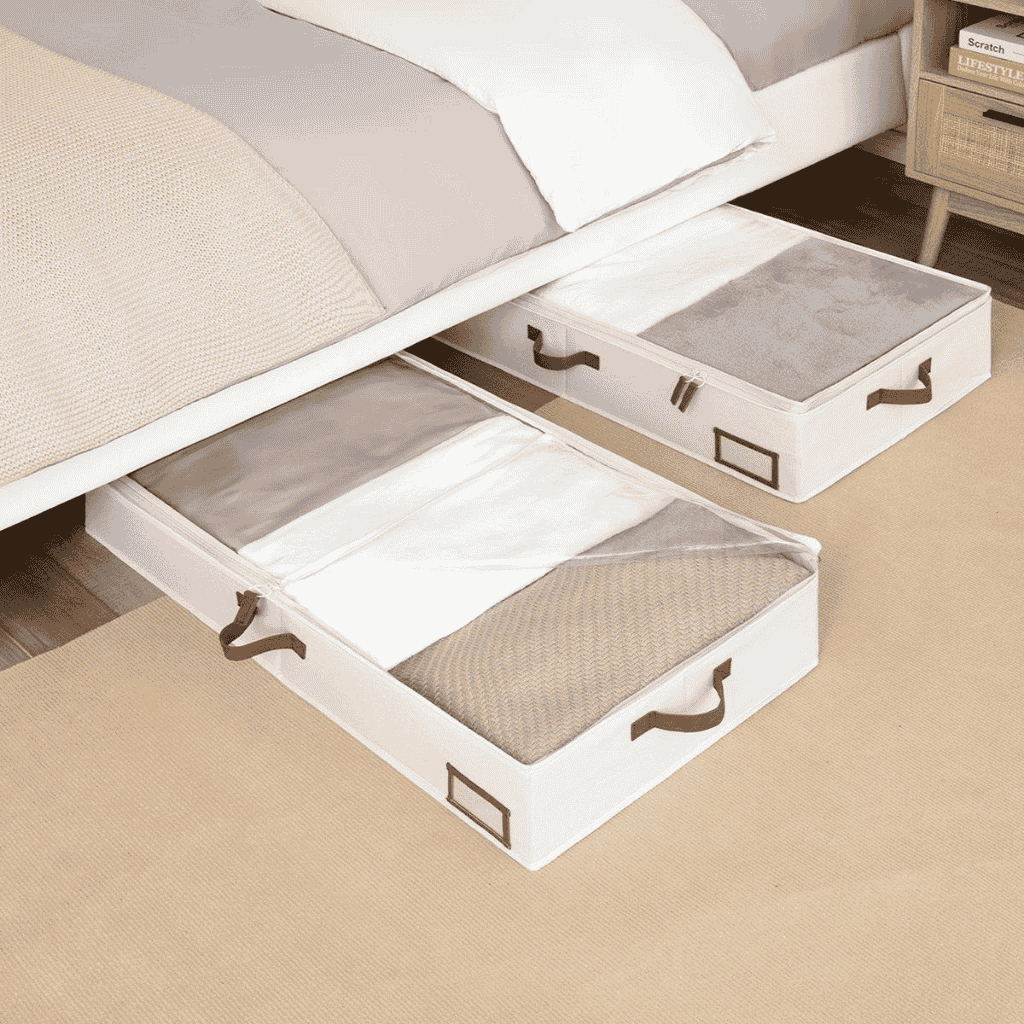
  1. StorageWorks Underbed Bags (Oatmeal Linen)

This choice strikes a good balance between breathability, structure, and design. It feels like it was made with purpose instead of just for utility.

Important Features

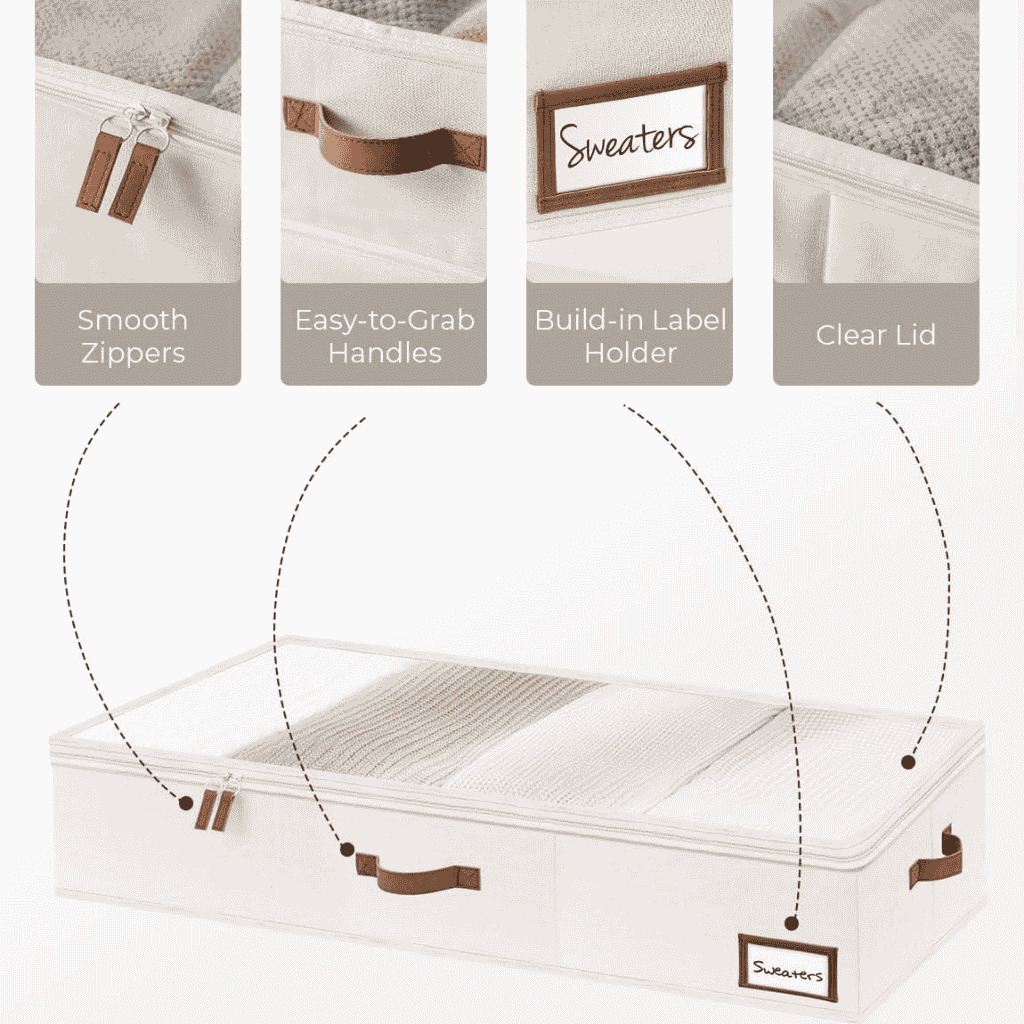
  • Linen-blend fabric with extra strong sides
  • Closure with a full zipper
  • Oatmeal color that is neutral
  • About 6.1 inches tall

Pros

  • Material that lets air through is great for natural fabrics.
  • Keeps its shape better than other soft bins
  • Quiet, gentle edges (no scraping under the mattresses)

Limitations

  • A little more than 6 inches of stringent clearance
  • Not completely sealed against moisture
  • Three-Star Reality
  • When you load them too much, zippers may become stuck.

Lune & Ivory Pro Tip

Leave 1 to 2 inches of room inside to make it easier for the zipper to slide and to lessen stress.

Best For

Sheets and pillowcases you use every day

What makes it stand out: It’s an unusual marriage of practicality and aesthetic serenity; it fits in with a comfortable, minimalist bedroom instead of standing out.

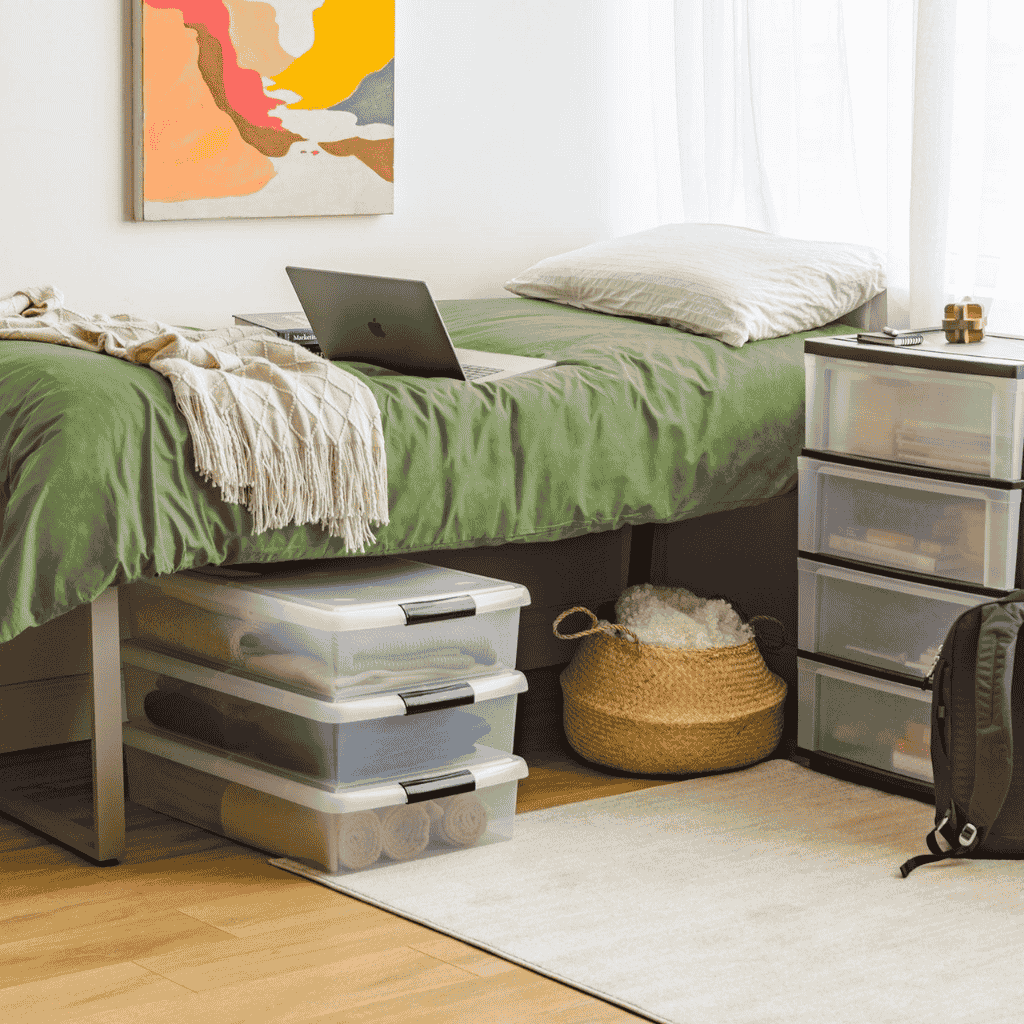
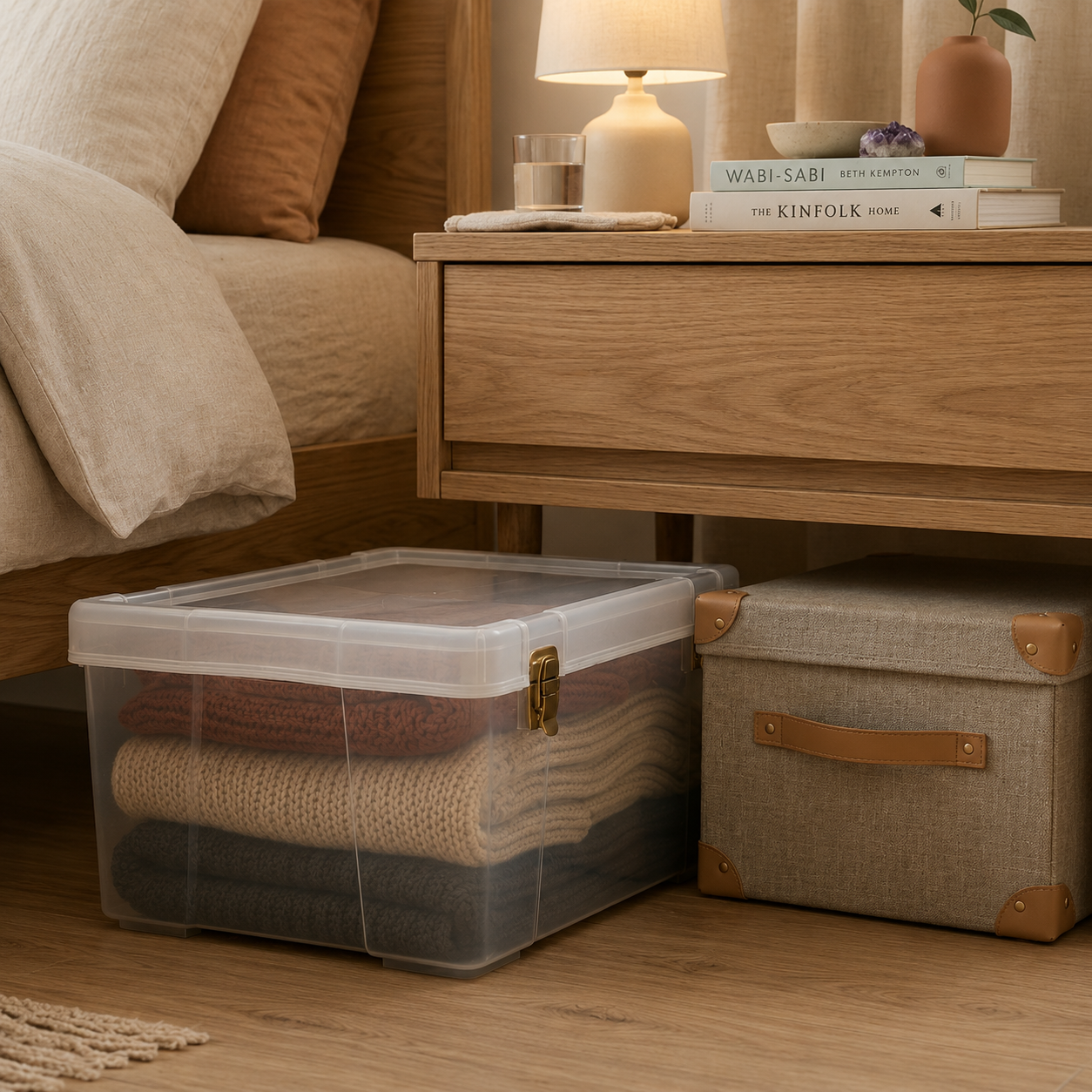
IRIS USA 50 Qt Underbed Storage Box

When you need structure and protection, this hard-shell option is a reliable choice.

Key Features

  • Rigid BPA-free plastic
  • Snap-tight lid
  • Stackable design
  • Approx. 6.5–6.8” height

Pros

  • Excellent for bulky or heavy bedding
  • Durable and easy to clean
  • Strong dust and moisture barrier

Limitations

  • Not breathable
  • Slightly too tall for lower beds

3-Star Reality

Lids can flex slightly when overfilled.

Lune & Ivory Pro-Tip

Use vacuum bags inside to reduce pressure and maximize capacity.

Best For

Winter duvets and off-season storage

Why It Stands Out

Maximum protection, especially for items that don’t require airflow.

Yecaye Under-Bed Storage with Wheels

Best for Frequent Use
Yecaye Under Bed Storage with Wheels, 2Pack Under Bed Storage Containers
$28.99
Check price on Amazon
We earn a commission if you make a purchase, at no additional cost to you.
05/06/2026 03:49 pm GMT

Designed for easy access, this rolling drawer-style system works especially well in frequently used spaces.

Key Features

  • Metal frame with fabric base
  • Built-in wheels
  • Large capacity options
  • Drawer-style access

Pros

  • Easy to slide in and out
  • Ideal for frequently rotated items
  • Maintains shape better than soft bins

Limitations

  • Slightly bulkier footprint
  • Less flexible for tight spaces

Best For

Weekly sheet rotations

Why It Stands Out

It shifts under-bed storage from “hidden” to functional extension of your daily routine.

Lifewit Low Profile Underbed Storage

Best Budget Pick
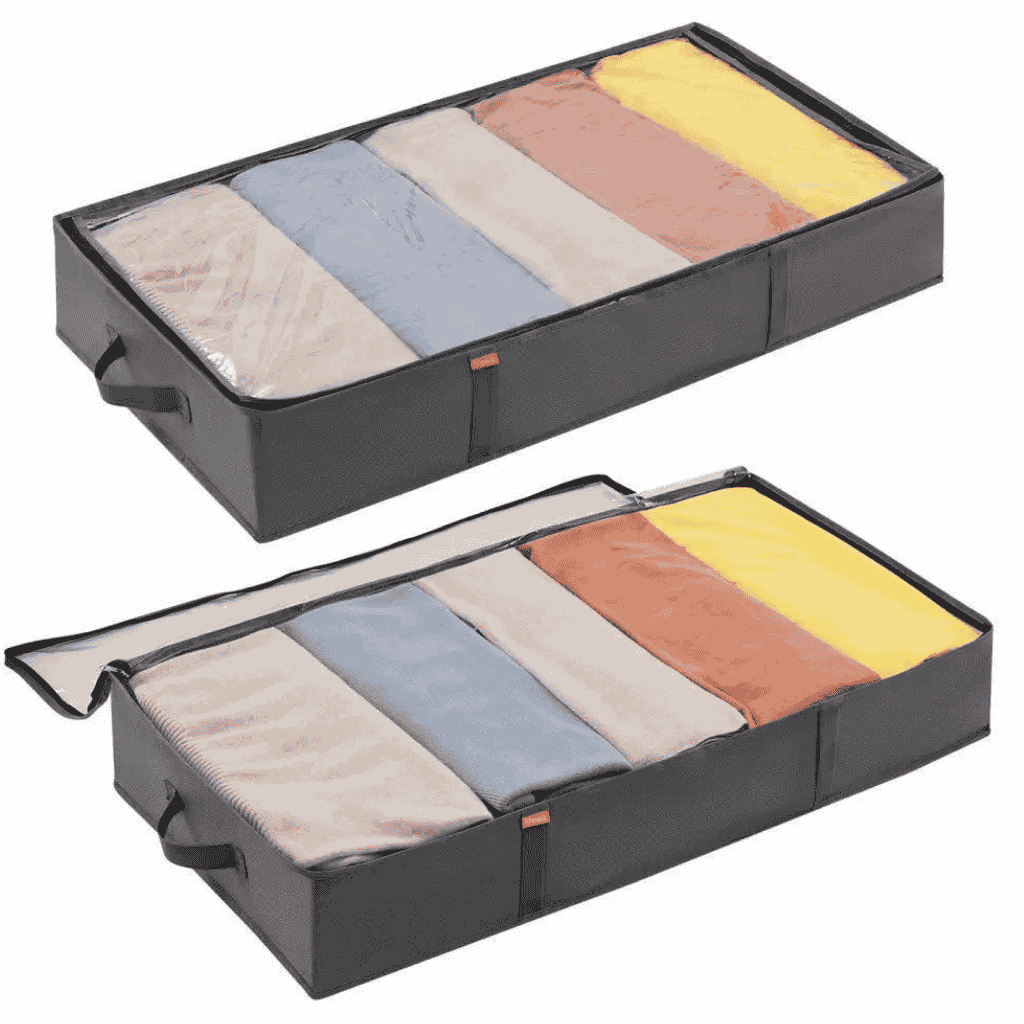
Lifewit Under Bed Shoe Storage Organizer Set of 2, 4.3 Inches Tall Low Profile Fabric Shoes Container Box with Clear Cover
$14.99
Check Price On Amazon
We earn a commission if you make a purchase, at no additional cost to you.
05/06/2026 03:50 pm GMT

A practical solution for beds with minimal clearance, where most storage simply won’t fit.

Key Features

  • Ultra-slim design (~5.1–5.3”)
  • Breathable non-woven fabric
  • Wide zip opening

Pros

  • Fits under very low beds
  • Lightweight and flexible
  • Budget-friendly

Limitations

  • Less structure
  • Limited capacity

3-Star Reality

Bottom fabric may wear with frequent dragging.

Lune & Ivory Pro-Tip

Reinforce corners with adhesive fabric patches for longer durability.

Best For

Tight platform beds

Why It Stands Out

One of the few truly low-profile options that consistently fits.

StorageWorks Underbed Storage Bins with Lid (Reinforced)

A more structured, elevated take on fabric storage, ideal for those who want both aesthetic calm and durability.

Key Features

  • Reinforced fabric panels
  • Clear viewing window
  • Dual zipper closure
  • Neutral tones

Pros

  • Holds shape better than most fabric bins
  • Softer visual footprint than plastic
  • Strong value in multi-packs

Limitations

  • Not fully rigid
  • Window panel may crease over time

Best For

Rotating seasonal bedding with a focus on aesthetics

Why It Stands Out

It bridges the gap between soft storage and structured organization, making it a versatile middle ground.

Insights from Comparison

The primary distinctions between these five possibilities are the materials they are made of and how easy they are to get to.

Fabric or Plastic:

Plastic is better for long-term or bulkier storage, whereas fabric is better for everyday linens.

Structure vs. Flexibility:

Structured choices keep their shape but need more space. Soft bins can change shape, although they could sag.

How Often You Can Go To It

  1. If you change sheets often, how easy they are to reach is more important than how many they can hold.
  2. Choose breathable fabric unless you need to protect yourself from dust, pressure, or dampness.

How to Pick (Buyer's Guide)

When choosing under-bed storage, keep these things in mind:

1. First, check the clearance

  • A lot of “under-bed” items are taller than they say they are.
  • Before you buy, always measure how much space you have.

2. Choose the right material for the job

  • Cotton sheets are made of fabric that lets air through.
  • Winter duvets → polyethylene that is sealed

3. Don't stuff it too much

  • This is the mistake that happens the most.
  • Too much stuff in bins can break zippers, warp lids, and make them last less long.

4. Consider how to get to it

  • You won’t utilize it if you can’t get to it.
  • Rolling or structured alternatives frequently make things more consistent.

5. Think about the humidity

  • Airflow is important in rooms that are humid.
  • Don’t use sealed plastic unless the contents are completely dry.

A minimalist bedroom doesn’t necessarily have less, it simply has less visible clutter. The right under-bed storage allows you to store intentionally, protect what matters, and maintain visual calm without sacrificing practicality.

  1. Choose StorageWorks for breathable, everyday elegance
  2. Choose IRIS USA for maximum protection and bulk storage
  3. Choose Yecaye for ease and accessibility
  4. Choose Lifewit for tight spaces
  5. Choose StorageWorks Underbed Storage Bins with Lid for elevated aesthetics

The goal isn’t just storage, it’s creating a system that quietly supports your daily life.

Frequently Asked Questions

1. What is the easiest way to store linen under the bed?

When storing natural fabrics like cotton or linen, it’s ideal to use breathable fabric. Plastic is superior for storing things that are fake or for a long time.

2. Can storing things under the bed create mold?

Yes, especially when the plastic is sealed and the air is damp. Always make sure that things are thoroughly dry before putting them away.

3. How can I keep the storage under my bed from getting dusty?

To keep exposure to a minimum, look for designs with fully zippered openings or lids that are tightly sealed.

4. How tall should storage under the bed be?

Choose containers that are at least 0.5 to 1 inch shorter than your clearance so that you can move them easily.

5. Is it worth it to have rolling storage?

Yes, it makes it much easier to use and lowers friction a lot if you use your linens often.

A calm bedroom doesn’t come from having less, it comes from seeing less. When your floors are clear and your storage is intentional, the entire room feels lighter, quieter, and more spacious.

Elle
We will be happy to hear your thoughts

Leave a reply

Lune and Ivory
Logo