Best Appliance Garages for Small Kitchens (No Installation Required)

Disclosure: As an Amazon Associate, I earn from qualifying purchases. This post contains affiliate links, which means we may receive a small commission, at no extra cost to you if you make a purchase through a link. This helps support our independent research and the maintenance of Lune & Ivory.

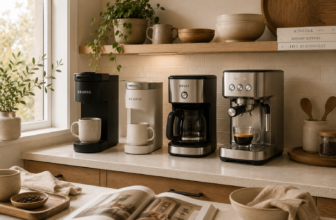
Every small kitchen eventually hits the same wall: you own the appliances you actually use, a toaster, a coffee maker, maybe an air fryer, but there’s nowhere to put them that doesn’t leave your counter looking like a small-appliance showroom.

Most appliance garage advice assumes you’re installing custom cabinetry: a roll-up tambour door built into your upper cabinets, drilled and mounted permanently. It’s a beautiful solution, if you own your kitchen and are willing to modify it. For the rest of us renting apartments or living somewhere we can’t drill into cabinets, that’s simply not realistic.

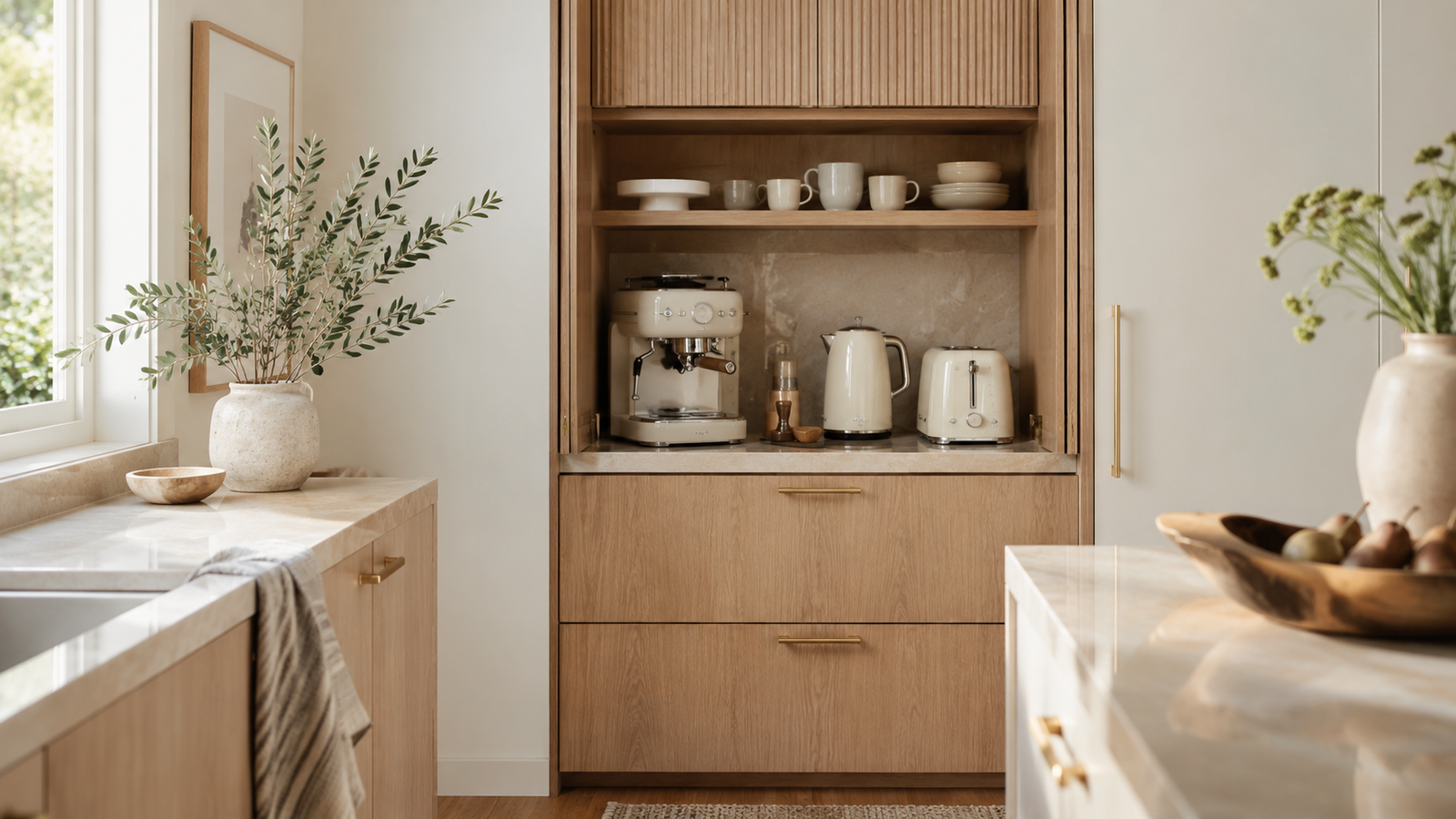
The good news is the concept works just as well without any installation at all. A freestanding appliance garage, a small cabinet or roll-top box that sits directly on your counter, gives you the same “appliance disappears behind a door” effect without touching your walls or cabinets. This is our guide to the best appliance garages for small kitchens that require zero installation, plus one upgrade worth knowing about if you do own your space.

Key Takeaways

  • Built-in appliance garages require cabinet installation, not an option for most renters
  • Freestanding, no-installation appliance garages sit directly on your counter and set up in seconds
  • A single appliance garage can typically hide one to two small appliances (toaster, coffee maker, or a compact air fryer)
  • If you own your kitchen, a cabinet-mounted appliance lift shelf is a more permanent, higher-capacity alternative
  • Match the appliance garage’s finish to your existing cabinetry or counter material for it to read as furniture, not storage
  • Measure your appliance’s height and width before buying, most no-install garages are sized for a toaster or coffee maker, not a large stand mixer

Why a No-Installation Appliance Garage Solves a Real Small-Kitchen Problem

Under our 3-Object Rule, each functional zone in your kitchen should hold no more than three visible items. Appliances are almost always the heaviest visual weight on a counter, bulkier, taller, and more colorful than anything else you’d display. A single toaster and coffee maker sitting out in the open can already use up your entire visual “budget” for a zone.

A freestanding appliance garage solves this without asking you to give up the appliances themselves, and without asking you to install anything. The concealment does the same job as tucking a laptop into a drawer: the function stays available, but the visual clutter disappears the moment you close the door.

The Best No-Installation Appliance Garages

1. Roll-Top Wood Countertop Appliance Garage

Best overall pick for renters

[LASSO BOX: Freestanding Roll-Top Wood Appliance Garage, natural or espresso finish]

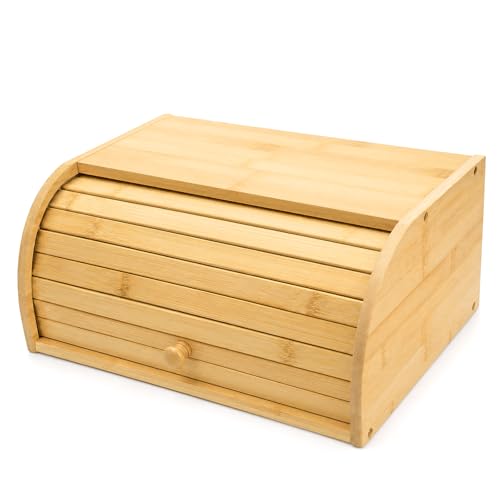
This is the closest you can get to the built-in tambour-door look without installing anything. It sits directly on your counter, has a curved wooden roll-top door that slides up and back, and holds a standard toaster or single-serve coffee maker comfortably. Look for one in a wood tone that matches your existing cabinets or open shelving, that’s what makes it read as furniture rather than an obvious storage box.

Pros: Zero installation, genuinely disappears visually when styled to match your kitchen, portable if you move

Limitations: Limited to one or two smaller appliances; check interior height clearance against your specific toaster or coffee maker

2. Bread-Box Style Metal Appliance Garage

Best for a modern or industrial kitchen palette

[LASSO BOX: Matte Black or Cream Metal Roll-Top Appliance Box]

A metal version of the same no-installation concept, styled closer to a large bread box than a wooden cabinet. Works especially well in kitchens with black or brushed-steel hardware, where a wood-tone box might clash. The powder-coated finish wipes clean easily, which matters if it’s sitting near a coffee maker that occasionally drips.

Pros: Easy to wipe clean, modern aesthetic, widely available in neutral colorways, sets up instantly with no tools

Limitations: Less breathable than wood, check that your appliance doesn’t need ventilation clearance while stored

3. Fabric-Front Rolling Cart With Appliance Cabinet Top

Best for a small kitchen that also needs extra storage

[LASSO BOX: Rolling Kitchen Cart With Cabinet Door and Butcher Block Top]

If your small kitchen needs more than just appliance concealment, extra counter space, a spot for cutting boards, a home for pantry overflow, a rolling cart with a closed cabinet section does double duty. The appliance lives inside the cabinet, out of sight, and the top surface gives you a small additional prep or serving area you didn’t have before. No installation, no tools, just roll it into place.

Pros: Solves two problems at once (concealment and extra counter space), fully portable, often includes additional drawers

Limitations: Larger footprint than a dedicated appliance garage; only worth it if you genuinely need the extra surface

For Homeowners: A More Permanent Alternative

If you own your kitchen and are open to a semi-permanent installation, a cabinet-mounted appliance lift shelf is worth considering instead of a freestanding, no-install garage. These mount inside an existing cabinet and use a spring-loaded mechanism to lift heavy appliances, stand mixers, food processors, juicers, up to counter height when needed, then lower them back down out of sight.

[LASSO BOX: Cabinet-Mounted Soft-Close Appliance Lift Shelf]

This solves a different problem than the no-install options above: it’s built for genuinely heavy appliances (up to 35–45 lbs in most models) that are awkward to lift in and out of a low cabinet by hand. It does require cabinet modification, so it’s not for renters, but if you’re renovating or already own your space, it’s the more elegant long-term solution for your heaviest daily-use appliance.

What to Measure Before You Buy

  • Appliance height with lid or hood open. If your toaster has a bagel-mode lever that pops up, or your coffee maker has a top-opening water reservoir, measure with that feature in its open position, not closed.
  • Appliance width and depth combined, not just one dimension — freestanding appliance garages are often narrower than they look in product photos.
  • Counter depth remaining after placement. A garage that’s 16 inches deep on a 24-inch counter only leaves 8 inches of usable prep space in front of it. Measure what’s left, not just what the garage itself takes up.
  • Ventilation needs. Appliances that generate heat during use (toasters, some coffee makers) need airflow even when idle. Check that your chosen garage has back or side ventilation gaps, not a fully sealed enclosure.

How to Style a No-Install Appliance Garage So It Doesn't Look Like Storage

The single biggest styling mistake is choosing a garage in a material or color that doesn’t match anything else in the kitchen. A mismatched wood tone or an off-white that doesn’t match your cabinets reads as an obvious storage box rather than an intentional piece.

Instead, treat your freestanding appliance garage as you would any other kitchen furniture. If your cabinets are white shaker-style, choose a matching cream or white garage. If your counters and shelving lean warm oak, choose a natural or honey-toned wood finish. This ties directly into the “Material Monotony” principle from our 3-Object Rule guide, unifying materials is what makes a functional object disappear into the design rather than stand out as clutter.

Frequently Asked Questions

1. What is an appliance garage in a kitchen?

An appliance garage is a cabinet or enclosure, either built into existing cabinetry or freestanding on your counter, designed to hide small countertop appliances like toasters and coffee makers behind a door, usually a roll-up tambour panel, while keeping them accessible for daily use.

2. Can I get an appliance garage without installing cabinets?

Yes. Freestanding, no-installation appliance garages sit directly on your countertop and set up instantly, making them the right choice for renters or anyone who can’t modify existing cabinetry.

3. How much weight can a no-installation appliance garage hold?

Most freestanding appliance garages are designed for lighter countertop appliances like toasters and single-serve coffee makers, typically under 15 pounds. For heavier appliances like stand mixers, a cabinet-mounted appliance lift shelf is a better option.

4. Do appliance garages cause appliances to overheat?

Not if the garage has proper ventilation gaps, typically on the back or sides. Avoid fully sealed enclosures for appliances that generate heat during use, and always let a toaster or coffee maker cool slightly before closing the door.

5. What size appliance garage do I need for a small kitchen?

Measure your appliance’s height with any lid, lever, or reservoir in its open position, plus its full width and depth. Most standard no-install garages fit a single toaster or coffee maker; check listed interior dimensions carefully before buying if you plan to store two appliances in one unit.

6. Is a no-installation appliance garage worth it for a small kitchen?

For most small kitchens, yes, it solves the common problem of daily-use appliances needing counter space while adding visual clutter, without requiring any cabinet modification. If your counter regularly feels crowded by a toaster, coffee maker, or blender, a freestanding appliance garage is one of the more effective single-purchase fixes available, especially for renters.

A calm kitchen counter isn’t about owning fewer appliances, it’s about giving the ones you use daily a place to disappear when they’re not needed. A no-installation appliance garage does exactly that, without asking you to give up your morning coffee routine, your weeknight toast, or your security deposit.

Kristina
We will be happy to hear your thoughts

Leave a reply

Lune and Ivory
Logo