Disclosure: As an Amazon Associate, I earn from qualifying purchases. This post contains affiliate links, which means we may receive a small commission, at no extra cost to you, if you make a purchase through a link. This helps support our independent research and the maintenance of Lune & Ivory.
You came home, glanced at your nightstand, and found a small puddle of water sitting under your Himalayan salt lamp. Maybe a faint ring on the wood. Maybe a slow drip down the side of the lamp itself. And the first thought is almost always the same: Is something wrong with it?
Short answer: no. A sweating salt lamp is doing exactly what it’s designed to do, it just isn’t doing it in the right conditions for your bedroom.
The longer answer involves some basic salt chemistry, three small placement changes, and one styling adjustment that protects your furniture without giving up the amber glow you bought the lamp for in the first place. This is the full how to stop Himalayan salt lamp from sweating guide, written for people who care just as much about their bedroom looking calm as they do about the lamp itself working properly.
Key Takeaways
- Salt lamp sweating is normal, it happens because salt naturally attracts moisture from the air
- The most effective fix is keeping the lamp on for at least 12–16 hours per day so the bulb’s heat counteracts the moisture
- Never place a salt lamp in bathrooms, kitchens, laundry rooms, or near humidifiers
- Always place your salt lamp on a non-porous surface like ceramic, marble, or glass, never directly on wood
- A dimmer cord lets you keep the lamp on overnight at low warmth without flooding the room with light
- Excessive sweating (constant pooling, water near the cord) signals a placement problem, not a defective lamp
Why Your Himalayan Salt Lamp Sweats in the First Place
Salt is hygroscopic, which is a clinical way of saying it pulls moisture out of the air. This is the same reason your salt shaker clumps up in a humid summer kitchen, and why food preservers have used salt for thousands of years, it strips water away from whatever’s near it.
When you place a large block of pink Himalayan salt in your bedroom, it does the same thing. Water vapor in the air gets pulled into the salt surface, and in humid conditions, more moisture gets absorbed than the lamp’s bulb can evaporate away. The excess pools at the base or runs in slow streams down the side. People call this “sweating,” “weeping,” “crying,” or “leaking”, all the same thing, none of them indicating that anything is wrong with your lamp.
In fact, if a lamp sold as “Himalayan salt” never sweats, it’s worth questioning whether it’s actually made of real salt at all.
The science is clear. The styling implications, though, are what most care guides skip.
How to Stop Your Himalayan Salt Lamp From Sweating: 5 Practical Fixes
1. Keep the Lamp On Longer (12–16 Hours a Day Minimum)
The single most effective thing you can do is leave the lamp lit. The heat from the bulb evaporates moisture as fast as the salt absorbs it. When the lamp is off, absorption continues but evaporation stops and the water has nowhere to go but down the side of the lamp.
Aim for at least 12 to 16 hours of “on” time per day. Many owners simply leave their lamps on 24/7, switching them off only when traveling. The bulbs are low-wattage (typically 15 to 40 watts), so electricity cost is genuinely minimal, usually under a few dollars per month even with constant use.
If you don’t want the lamp blazing at full brightness while you sleep, this is where a dimmer cord earns its place.
A dimmer cord lets you run the lamp at low warmth overnight, enough heat to prevent sweating, soft enough light to support sleep. It’s the single most useful accessory for any salt lamp owner in a humid climate, and replacement cords are inexpensive on Amazon if your original lamp didn’t come with one.
2. Move the Lamp Out of High-Humidity Rooms
Salt lamps will always sweat more in rooms with high moisture. The most common placement mistakes:
- Bathrooms- steam from showers floods the air with water vapor
- Kitchens- boiling pots and dishwashers add humidity constantly
- Laundry rooms- wet clothes and dryer vents elevate moisture
- Basements- naturally damp, especially in older buildings
- Near humidifiers- including bedroom humidifiers running overnight
- Open windows in humid weather- especially during summer rain
The best placement is a moderately dry, climate-controlled room with good airflow, typically a bedroom, living room, or home office. If you live in a genuinely humid climate (coastal regions, monsoon seasons, tropical environments), running an air conditioner or a small dehumidifier in the same room makes a substantial difference.
3. Always Place It on a Non-Porous Tray or Coaster
This is the styling fix that most care guides skip, and the one that matters most if you’ve invested in beautiful wood furniture.
Even a well-cared-for salt lamp will weep slightly during humid weather. If it’s sitting directly on a wooden nightstand or dresser, that moisture will leave water rings, lift the finish, or stain the grain over time. A single humid week can be enough to cause permanent damage.
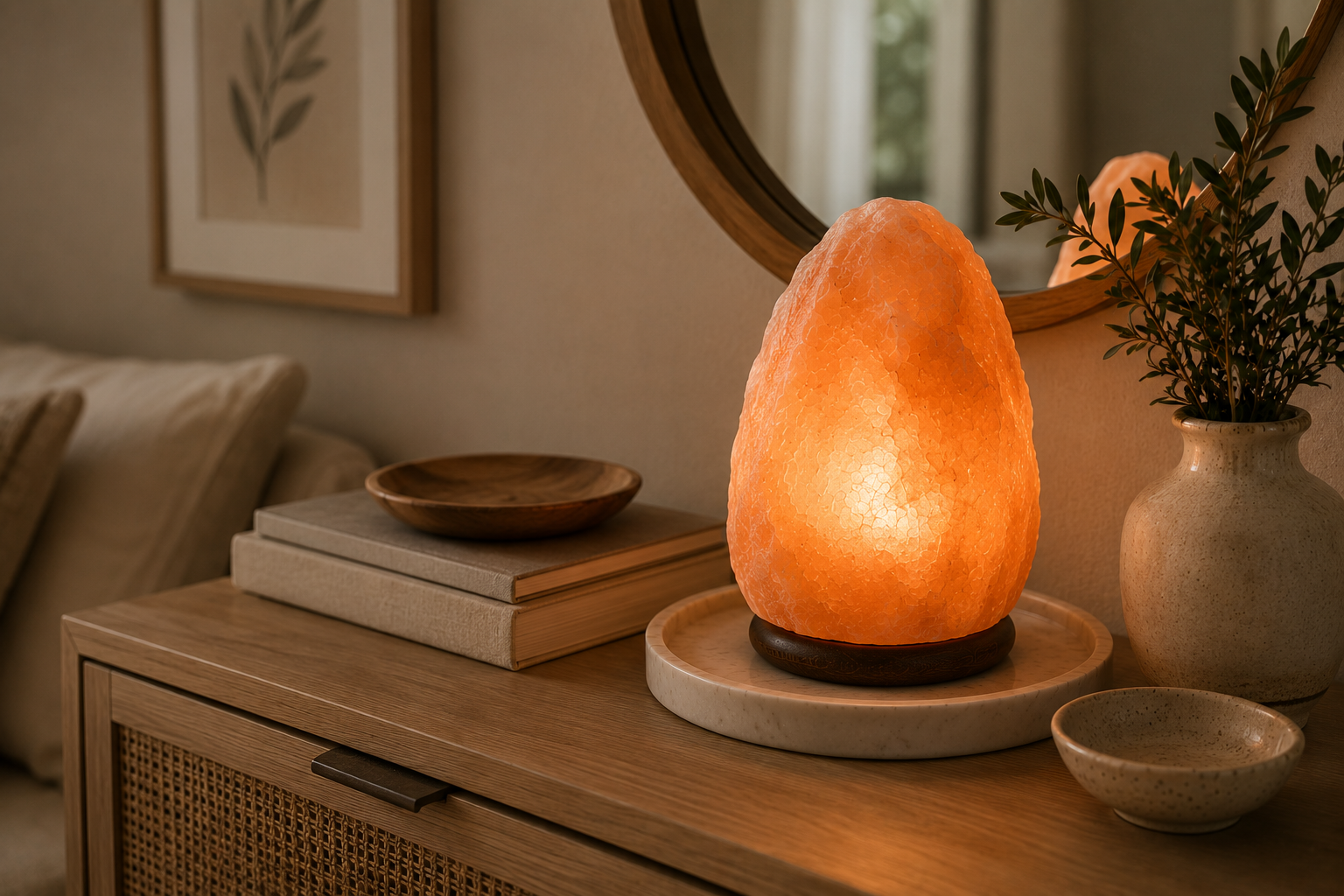
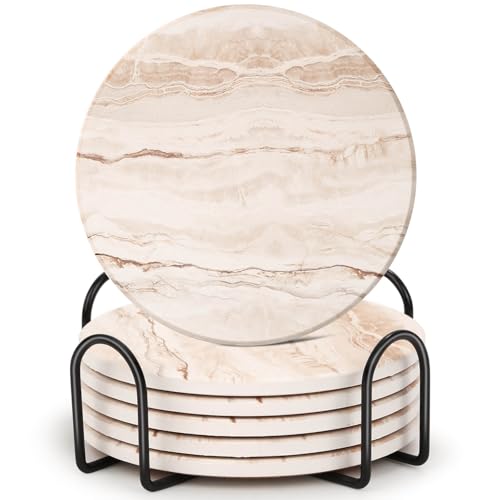
The solution is to always place your salt lamp on a non-porous protective surface. Ceramic, marble, glass, and glazed stoneware all work beautifully, and they double as styling pieces that elevate the lamp visually rather than hiding it.
A round marble or ceramic tray, about an inch larger in diameter than the base of your lamp, catches any sweating cleanly without becoming visible clutter. We cover the styling principle behind this kind of “tray-as-frame” trick in our 3-Object Rule guide, it’s the same logic that turns three loose objects into one intentional vignette.
Skip metal trays for everything except brass and copper (other metals can corrode from salt exposure). And never use a coaster smaller than the lamp’s base, sweat that runs over the edge defeats the entire purpose.
4. Use the Right Bulb (and Replace It When It Burns Out)
A salt lamp that’s barely warm to the touch isn’t producing enough heat to evaporate the moisture it’s absorbing. If your lamp consistently sweats even after 12+ hours of operation, the bulb may be the issue.
Most salt lamps use 15W to 40W incandescent bulbs, depending on size. Larger lamps need higher wattage to generate enough heat across the bigger salt mass. If you’ve replaced the original with a low-wattage LED bulb (which produces far less heat), the lamp will sweat almost constantly, LEDs don’t generate enough warmth for the salt to stay dry.
5. Wipe the Lamp Gently With a Dry Cloth (Never Wet)
When you notice condensation building up, take a soft dry cloth and gently wipe the surface of the lamp. This removes the surface moisture before it can run down to the base. Do this every few days during humid weather, less often in dry seasons.
Never use a wet cloth or running water on a salt lamp. Water dissolves salt, which means cleaning it the way you’d clean any other lamp will literally erode the surface and shorten its lifespan dramatically. A dry microfiber cloth is the only correct tool.
For long-term storage (moving, traveling for more than a few weeks), wrap the lamp tightly in a plastic bag and seal it. This prevents moisture absorption while the lamp is off and unprotected by bulb heat.
How to Style a Himalayan Salt Lamp So It Looks Intentional
Most salt lamps in real bedrooms look slightly out of place because they’re treated as a single decorative object dropped onto a nightstand. The fix is to integrate them into a small intentional vignette, which also gives you the protective tray you needed anyway.
The simplest approach uses three pieces:
- A marble or ceramic tray as the base (your moisture protection)
- The salt lamp as the warm-light anchor
- One small natural object, a stoneware bud vase, a small woven box, or a brass dish for jewelry
That’s it. Three objects on a tray reads as styled; three objects loose on the nightstand reads as cluttered. This is the same principle covered in our warm minimalist nightstand essentials guide, which walks through specific product pairings for the full bedroom system.
For placement within the room, salt lamps work especially well in west-facing and north-facing bedrooms, where the warm amber light supplements either fading golden-hour light or the cool flat tones north-facing rooms struggle with. We map this directional logic in our Light Map Method guide, it’s why some bedrooms naturally suit salt lamps and others feel slightly off with one added.
If you’re still deciding between a salt lamp and a selenite lamp for your bedroom’s overall palette, our selenite vs Himalayan salt lamp comparison covers which works better for cream-toned versus oak-toned interiors.
When Sweating Signals a Real Problem
A small amount of moisture buildup is normal and harmless. A few situations, however, warrant immediate attention:
- Water pooling near the cord or socket- unplug the lamp immediately, dry it completely, and move it to a drier location before plugging back in
- Flickering, buzzing, or burning smells- the cord or bulb may be water-damaged; replace before further use
- Constant pooling even in low-humidity conditions- your bulb may be underpowered, or the lamp may be too large for the bulb wattage
- The salt itself feeling soft or crumbling- the lamp has absorbed too much moisture over time and may need replacement
Treat the lamp like any other electrical fixture: keep moisture away from the wiring, replace damaged cords promptly, and don’t ignore signs of electrical wear.
Frequently Asked Questions
1. Is it normal for a Himalayan salt lamp to leak water?
Yes. A salt lamp leaking or sweating water is completely normal, it’s caused by salt naturally absorbing moisture from the air. In fact, a lamp that never sweats may not be made of real Himalayan salt at all. The key is managing the sweating so it doesn’t damage your furniture.
2. Can I leave my Himalayan salt lamp on 24/7?
Yes, most owners do. The bulb is low-wattage (15 to 40 watts), and constant warmth is actually the best way to prevent sweating. Electricity cost is typically just a few dollars per month. Just make sure the cord and bulb are in good condition.
3. Will a sweating salt lamp damage my wood nightstand?
It can, yes. Even small amounts of moisture will leave water rings, lift varnish, or stain wood grain over time. Always place your salt lamp on a non-porous tray, marble, ceramic, glass, or glazed stoneware, before setting it on any wooden surface.
4. Why is my Himalayan salt lamp sweating so much suddenly?
Sudden excessive sweating usually indicates a change in room humidity (rainy season, a new humidifier, a window left open) or that the lamp has been off for too long. Turn it back on for several hours, check that it’s away from moisture sources, and the sweating should reduce within a day.
5. Can I use an LED bulb in my Himalayan salt lamp?
Not recommended. LED bulbs don’t produce enough heat to evaporate moisture from the salt surface, which means an LED-equipped lamp will sweat almost constantly. Stick with the incandescent or candelabra bulb wattage recommended by the manufacturer.
6. Should I store my salt lamp during humid seasons?
Only if you’re not using it. If you’ll be away for several weeks, wrap the lamp in a sealed plastic bag to prevent moisture absorption. If you’re home, leaving the lamp on through the humid season is the simpler protective measure.
A salt lamp is one of the few decorative objects in a bedroom that actively responds to its environment. The sweating isn’t a flaw, it’s the lamp doing exactly what salt does. With the right placement, the right bulb, and a marble tray underneath, that quiet responsiveness becomes part of what makes the lamp feel alive in the room rather than just an ornament on the nightstand.
Take care of it well, and it will glow softly through years of evenings, without leaving a single water ring behind.