How to Care for a Selenite Lamp (Cleaning, Placement, and Common Mistakes)

Disclosure: As an Amazon Associate, I earn from qualifying purchases. This post contains affiliate links, which means we may receive a small commission, at no extra cost to you, if you make a purchase through a link. This helps support our independent research and the maintenance of Lune & Ivory.

A selenite lamp looks like it should be indestructible. It’s carved from stone, it sits still on a nightstand or shelf, and it doesn’t have any of the obvious fragility of glass or ceramic. That appearance is deceiving. Selenite is one of the softest minerals used in home decor, soft enough to scratch with a fingernail in some cases and a surprising number of lamps get damaged within their first year simply because nobody warned the owner how differently this material behaves compared to everything else on their shelf.

This is a practical, no-nonsense guide to keeping a selenite lamp in good condition: how to clean it, where to place it, and the handful of common mistakes that shorten its life far faster than normal use would.

Key Takeaways

  • Selenite is water-soluble—never clean it with a wet cloth, and never let it sit near steam, splashes, or humidity
  • Use only a dry, soft cloth (microfiber works well) for regular dusting
  • Selenite has a Mohs hardness of about 2, making it one of the softer decorative minerals—handle it the way you’d handle a piece of chalk, not a piece of granite
  • Keep it out of direct, prolonged sunlight, which can cause discoloration over time
  • Small fibrous flaking is normal for selenite and isn’t a sign of a defective lamp
  • Avoid high-traffic areas where the lamp could be knocked over, and always secure the cord to prevent tripping

Why Selenite Needs Different Care Than Other Lamps

Selenite is a form of gypsum, the same mineral family used to make plaster and drywall—which is part of why it behaves so differently from the stone, ceramic, or glass most other lamps are made of. It has a fibrous, layered internal structure and a hardness rating of roughly 2 on the Mohs scale, where talc sits at 1 and diamond sits at 10. For comparison, a fingernail is roughly a 2.5, which means selenite can genuinely be scratched with careless handling.

The other defining trait is water sensitivity. Because selenite is a sulfate mineral, sustained contact with water gradually dissolves its surface, leaving it cloudy, chalky, or pitted. This isn’t a slow, years-long process either, a single soak or a spill left unattended can visibly dull a lamp’s clarity within minutes.

None of this makes selenite a poor choice for decor. It just means the care routine looks different from anything you’d do with a ceramic vase or a glass lamp.

How to Clean a Selenite Lamp

  • For regular dusting, a dry, soft cloth is all you need. Microfiber works particularly well because it picks up dust without leaving lint or fibers behind. Gently wipe the surface in the direction of the crystal’s natural grain rather than scrubbing in circles, which can accentuate any existing fine scratches.
  • Never use water. Not a damp cloth, not a spray cleaner, not a quick rinse under the tap. Even brief water contact can cause surface clouding that doesn’t reverse. If your lamp does get splashed accidentally, blot it immediately with a dry cloth and let it air-dry completely in a well-ventilated spot before using it again.
  • Avoid cleaning products entirely. Glass cleaner, all-purpose spray, even a “gentle” household cleaner can react poorly with selenite’s surface. A dry cloth is genuinely the only tool this material needs.
  • For a deeper dust buildup, a soft, dry natural-bristle brush (the kind used for delicate ceramics) can loosen debris in carved grooves or textured areas before you wipe it down with the cloth.

[LASSO BOX: Microfiber Dusting Cloths, soft-touch, set of 3]

Where to Place a Selenite Lamp

  • Keep it away from bathrooms, kitchens, and laundry rooms- anywhere steam, splashes, or high humidity are a regular occurrence. A selenite lamp placed near a shower or above a stovetop is set up to degrade far faster than one on a dry bedroom nightstand.
  • Avoid direct, prolonged sunlight. While a little morning light won’t cause immediate harm, sustained direct sun exposure over months can cause selenite to yellow or lose some of its bright translucency. A spot with filtered or indirect light—near a window but not directly in the sun’s path—is ideal.
  • Choose a stable, low-traffic surface. Because selenite chips and scratches easily, avoid placing it somewhere it could be bumped, especially near a doorway, on a narrow shelf edge, or anywhere pets or small children regularly move through. A wide, stable nightstand or a dedicated shelf works better than a crowded, high-activity counter.
  • Use a stable base if yours doesn’t have one. Many selenite lamps come with a small wooden base for stability, but if yours doesn’t, placing it on a soft coaster or small tray prevents wobbling on an uneven surface and adds a layer of protection against scratching the lamp’s base.

[LASSO BOX: Round Wooden Lamp Base or Coaster, natural finish]

Common Selenite Lamp Mistakes

  1. Cleaning it like any other lamp. The single most common mistake is treating selenite the way you’d treat glass or ceramic—a quick wipe with a damp cloth. This is the fastest way to cloud the surface permanently.
  2. Storing it in a damp space. Basements, uninsulated garages, or any room with fluctuating humidity will shorten a selenite lamp’s lifespan even if it’s never directly wetted. If you need to store one temporarily, choose a dry closet or cabinet, not a damp storage area.
  3. Overtightening or forcing the cord socket. Many selenite lamps are hand-carved with a hollowed interior that fits the bulb and cord assembly somewhat loosely by design. Forcing a tight fit or yanking the cord to reposition the lamp can crack the internal cavity. Handle the cord gently and support the base of the lamp with your other hand when adjusting it.
  4. Assuming small flaking is a defect. Selenite has a naturally fibrous structure, and very fine surface shedding is a normal characteristic of the mineral, not a sign of poor quality. That said, if you notice large chips, cracks, or crumbling beyond typical fine dust, that’s a sign the lamp has taken real damage and may need replacing.
  5. Placing it somewhere it can be knocked over. Selenite doesn’t bounce back from a fall the way sturdier materials might. A stable, low-traffic spot is worth prioritizing over a more visually dramatic but precarious placement.

Styling a Selenite Lamp Without Compromising Its Care

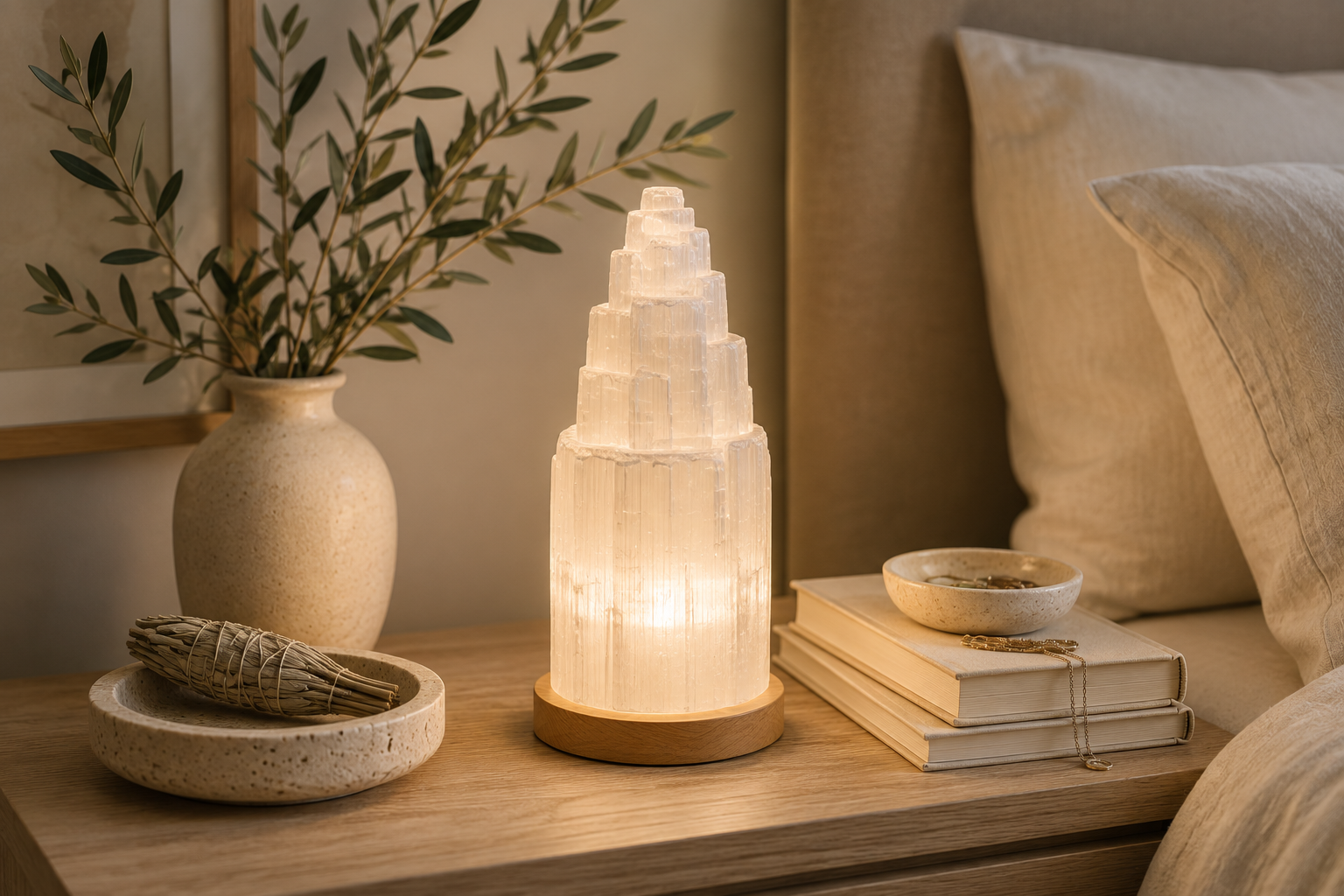
The good news is that good care and good styling point in the same direction. A stable nightstand, a dry bedroom, indirect light, and a low-traffic corner are exactly the placements that also photograph and read best in a warm-minimalist space.

For pairing ideas, which palettes and materials suit selenite’s cool white light best, our Selenite vs. Himalayan Salt Lamp comparison covers the styling side in depth, including how selenite fits into cream, sage, and marble-toned rooms specifically. If you’re deciding where in your home’s lighting plan a selenite lamp makes the most sense, our Light Map Method guide walks through how natural light direction should inform where accent lighting like this goes.

And if you’re weighing selenite against a warmer alternative for the same nightstand spot, our Himalayan salt lamp care guide covers the very different (and more humidity-sensitive) maintenance that comes with that option instead.

Frequently Asked Questions

1. Can you clean a selenite lamp with water?

No. Selenite is water-soluble, and even brief contact with water can cause the surface to cloud or dull permanently. Always clean it with a dry, soft cloth only.

2. Why is my selenite lamp shedding small flakes?

This is normal. Selenite has a naturally fibrous, layered structure, and fine surface shedding is a characteristic of the mineral rather than a sign of damage. Large chips or crumbling, however, indicate real damage.

3. Can selenite lamps be left on all the time?

Most selenite lamps use low-heat bulbs and can typically be left on for extended periods, though it’s worth checking your specific lamp’s manufacturer guidance and using a bulb wattage they recommend to avoid overheating the internal cavity.

3. Does sunlight damage a selenite lamp?

Prolonged, direct sunlight exposure can cause selenite to discolor or lose some of its translucency over time. Indirect or filtered light is a safer long-term placement.

4. How long do selenite lamps last?

With proper dry care and stable placement, a selenite lamp can last for many years. Most damage comes from water exposure, drops, or humid storage conditions rather than natural aging.

5. Is it normal for a selenite lamp to feel slightly rough in places?

Yes. Because selenite is hand-carved from a natural, fibrous crystal, minor texture variations, small ridges, or slightly rough patches are common and don’t indicate a manufacturing flaw.

A selenite lamp rewards a fairly simple care routine, dry cloth, stable surface, and away from water and direct sun. Get those basics right, and there’s very little standing between you and years of the same soft, even glow you were drawn to in the first place.

Elle
We will be happy to hear your thoughts

Leave a reply

Lune and Ivory
Logo